Why Toradora! Is Still One of the Best Romance Anime of All Time
Discover why Toradora! remains a classic romance anime 18 years later. We explore how its characters, emotional depth, and subversion of tropes create a timeless story of love.

Few titles in the medium of animation manage to stay relevant for over a decade. In the world of seasonal releases, most shows vanish into obscurity once the final credits roll. However, Toradora! remains a persistent presence in recommendations. Even as visual styles evolve and new tropes emerge, fans continue to return to the story of the Palmtop Tiger and the boy with the scary eyes.
The series initially feels like a typical 2000s high-school romantic comedy. It uses familiar archetypes and a premise rooted in a convenient alliance. Yet, the reason Toradora! is so good lies beneath that surface. It is a show about the messy, frustrating, and often painful process of growing up. While it may not have invented the genre, it certainly set a gold standard for how to handle long-form character growth.
Subverting the Archetype: Why Toradora! Is a Classic
At first glance, Taiga Aisaka is the quintessential tsundere. She is small, aggressive, and prone to lashing out at Ryuuji Takasu. In the early episodes, this physical comedy is prominent, and it is perhaps the one element of the Toradora! anime that has aged the most poorly. Modern viewers might find the early violence a bit jarring. However, the show quickly moves past the gag to explore the root of her behavior.
Taiga’s aggression is a shield for profound vulnerability and loneliness. She lives alone in a luxury apartment, effectively abandoned by her family. Ryuuji, conversely, looks like a delinquent but is actually a domestic, nurturing soul who finds joy in cleaning and cooking. Their relationship begins as a mutual pact to help each other date their respective best friends, but it evolves into a deep emotional dependency.
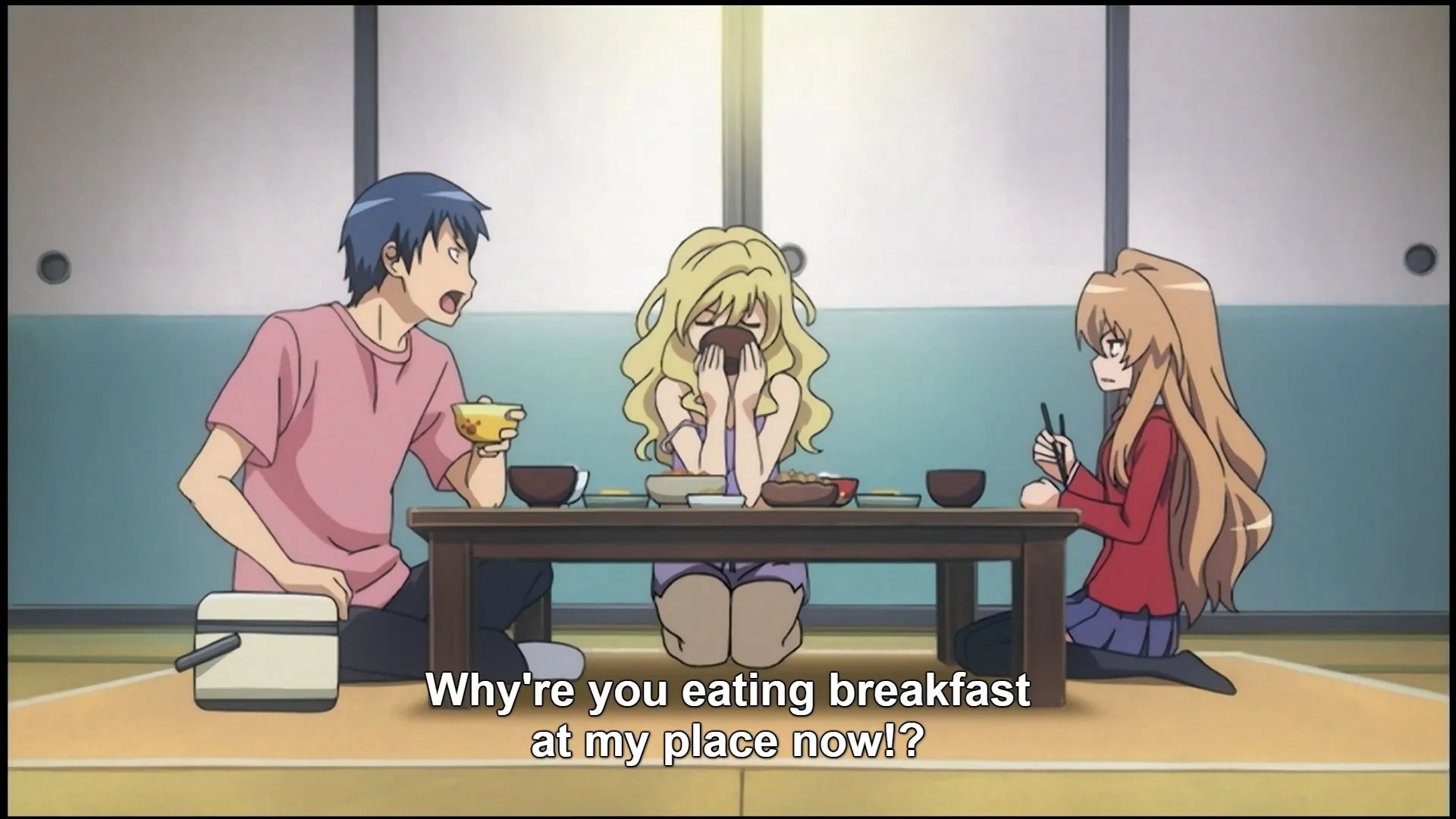
This dynamic works because it is grounded in domesticity. They don't just fall in love during grand romantic gestures. They fall in love while eating dinner, doing laundry, and navigating the mundane stresses of school life. This slow build is why Toradora! character development is often cited as the show's greatest strength.
More Than Just Obstacles: The Supporting Cast
In many examples of the best romance anime, supporting characters exist only to provide conflict for the main couple. This series avoids that trap by giving Minori, Ami, and Kitamura their own complex internal lives. They are not just pawns in a love polygon; they are teenagers dealing with their own versions of the "fake it till you make it" mentality.
Minori Kushieda: Her hyperactive persona hides a girl who is constantly sacrificing her own happiness for the sake of others.
Ami Kawashima: Initially introduced as a villainous foil, she becomes the most perceptive character in the show. She is the first to see the truth of everyone's feelings, acting as a cynical but necessary voice of reason.
Yusaku Kitamura: While he often provides comic relief, his own breakdown midway through the series highlights the pressure of being the "perfect student."
Watching these characters interact feels like watching a real friend group. They make mistakes, they lie to themselves, and they often choose to stay silent to protect the status quo. If you are looking for more animes to watch, you will find that few shows handle a five-person ensemble this effectively.
The Difference Between Liking and Loving
One of the most profound aspects of this classic romance anime is how it distinguishes between a crush and true love. The characters spend a significant portion of the story chasing people they "like." These crushes are passive and based on an idealized version of the other person. Ryuuji likes Minori because she is a sunbeam of energy; Taiga likes Kitamura because he was the first person to show her kindness.
However, love in this show is shown to be an active, trusting choice. It is about seeing someone at their absolute worst—messy, crying, and broken—and choosing to stay. This distinction is what makes the second half of the series so emotionally heavy. The characters have to reconcile the fact that the people they should want aren't the ones they actually need.
Is Toradora! Worth Watching for Modern Fans?
Some might wonder if a show from 2008 still holds up. The answer is yes, primarily because its themes of isolation and the fear of the future are timeless. We all know what it feels like to hide our true selves to fit in. This sense of longing is a common theme in many YouTube Recap channel discussions because it resonates across generations.
While the animation style might feel slightly dated compared to modern high-budget productions, the emotional beats remain sharp. The legendary Christmas Eve episode is still a masterclass in tension and heartbreak. It captures the exact moment when a character realizes that their self-sacrifice has reached its breaking point.
Frequently Asked Questions
Does Toradora! have a happy ending?
Yes, the series concludes with a definitive resolution for the main couple. However, the path to get there is emotionally taxing and involves significant growth for all characters involved. Make sure to watch past the credits of the final episode!
Is the anime faithful to the light novels?
The anime covers the majority of the source material. While some internal monologues are lost, the 25-episode format allows the story to breathe and hit all the major emotional milestones found in the books.

Conclusion
Ultimately, Toradora! is a classic because it treats the emotions of teenagers with respect. It understands that at seventeen, a broken heart or a realization of love can feel like the end of the world. By grounding its romance in domestic reality and allowing its characters to be deeply flawed, it creates a story that feels human rather than manufactured.
If you have never seen it, or if it has been years since your last watch, the journey of Taiga and Ryuuji is well worth your time. It reminds us that love isn't just a feeling we have for someone. It is a commitment to being there for them, even when the world gets complicated. For anyone interested in searching for a meaningful connection in fiction, this remains the gold standard.
Sources
About the Author
Publishing Journeyman
The Publishing Journeyman shares practical guides, eBook formatting tips, and self-publishing insights to help authors navigate every step of their publishing journey.
Leave a Reply
0 Comments
Loading comments...